
How to Launch RTD Canned Cocktails in the Australian Market
RTD canned cocktails represent one of the most dynamic and consistently growing segments in the Australian drinks market. Consumer demand for premium, convenient, and genuinely flavourful ready-to-drink options has reshaped the category over the past five years — and the growth shows no sign of slowing. For brand founders, distillers, hospitality operators, and entrepreneurs with a compelling product idea, the RTD canned cocktails space offers real commercial opportunity.
Getting a product to market, however, involves significantly more moving parts than the category’s accessible image suggests. From RTD development through to commercial production and distribution, the process is layered, technical, and full of decisions that have lasting consequences for the brand’s commercial viability. Case studies like our work on functional RTD seltzer with Mirage 7 show just how many of those decisions compound through a launch.
This is a comprehensive guide to what it actually takes to launch RTD canned cocktails in Australia — written by Harris Bev for founders who want to understand the full picture before they commit resources.
Why RTD Canned Cocktails?
Before diving into process, it is worth understanding what makes the RTD canned cocktails format compelling from a commercial standpoint — because the format’s characteristics have direct implications for how a product is developed and positioned.
The can’s design offers portability and convenience that glass cannot match. Canned cocktails are permitted in venues and locations where bottles are not — music festivals, sporting events, outdoor hospitality settings, and airline service, among others. They are well suited to e-commerce fulfillment and direct-to-consumer channels because of their weight-to-volume ratio and resistance to breakage. They have exceptional design surface area, and in a category where packaging is a significant brand differentiator, that matters.
The RTD canned cocktails category also spans enormous ground. Spirit-based cocktails, hard seltzers, wine-based spritzers, non-alcoholic RTDs, and functional drinks all fall within this umbrella. Knowing with precision which subcategory you are entering — and understanding who you are competing with at that exact price point and in that exact channel — shapes every decision in the development process.
The RTD Development Process: Stage by Stage

Stage One: Concept and Commercial Positioning
Successful RTD development begins with rigorous commercial positioning, not with a flavour idea. Before any formulation work begins, the foundational questions need clear answers. Who is the target consumer, and what occasion does this product serve? What is the flavour direction, the ABV, the format (250ml, 330ml, 375ml, 500ml)? What is the retail price point, and what does the cost of goods need to be to deliver a margin that works across the intended distribution channel?
These questions are not abstract marketing considerations. They directly determine formulation constraints, packaging decisions, manufacturing requirements, and ultimately whether the business model is viable. A single-serve RTD positioned at $8 in premium independent bottle shops has completely different economics to a four-pack targeted at grocery retailers at $22.
Getting the commercial model right before formulation begins is the single biggest thing that separates RTD development programmes that succeed from those that stall.
Stage Two: Spirit Sourcing and Formulation
For spirit-based RTD canned cocktails, the base spirit is a significant early decision. Options include contracted domestic distilleries producing bespoke spirit to specification, bulk imported spirit (vodka, neutral grain, rum, tequila, agave), or — for brands with an owned distillery or a strong preference for provenance — proprietary spirit produced in-house.
Each option has different implications for cost, minimum volumes, lead times, and the story the brand can tell about its ingredients. A vodka soda that uses generic imported neutral spirit is a very different brand proposition to one built on an artisanal domestic vodka with a verifiable provenance story.
Flavour development happens in parallel with spirit sourcing — working with flavour houses to develop and iterate on the sensory target. The can environment creates specific formulation challenges: the aluminium lining interacts with certain flavour compounds; carbonation levels affect flavour perception; pH stability is critical for both taste and microbial safety.
RTD formulation requires expertise in these variables, not just general beverage development knowledge.
Stage Three: Stability and Compliance
Once a formula is approaching final, it goes through stability testing — the stage that more RTD development programmes underinvest in than any other. Canned cocktails need to be tested across their full intended shelf life to confirm that flavour integrity, carbonation retention, clarity, and microbial safety all hold. The can lining and headspace conditions create a specific environment that needs to be validated, not assumed.
Compliance work runs in parallel: FSANZ labelling requirements for alcoholic beverages, mandatory pregnancy warning labelling, standard drinks declaration, allergen information, and ATO excise registration all need to be in place before production can begin. Label artwork must be compliant before it goes to print — errors discovered post-production are expensive.
RTD Manufacturing: Finding and Working With the Right Partner
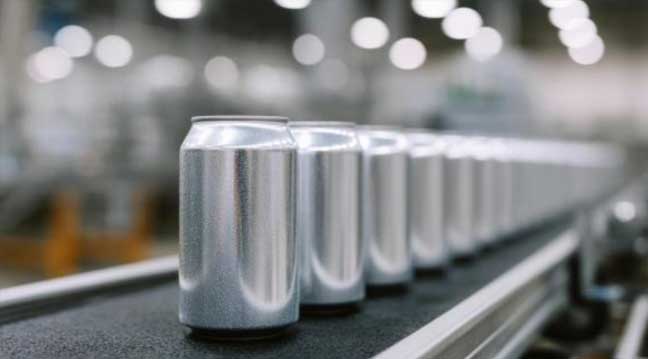
RTD manufacturing in Australia is carried out through specialist co-packers equipped with canning lines — filling equipment designed for carbonated, still, or nitrogen-purged beverages, combined with quality assurance systems appropriate for food-grade alcohol production.
Finding the right RTD manufacturing partner for your product and scale is one of the most important decisions in the entire launch process — and one where inexperience shows quickly. Not all RTD manufacturing facilities are the same. Some run only high-volume production and have minimum order quantities that are unworkable for a new brand. Others have specific technical capabilities or limitations that affect which product formats they can handle. Some are set up for ambient-fill products; others for cold-fill. Some have dedicated runs for alcoholic products; others co-produce alcoholic and non-alcoholic beverages on shared lines.
Cans are also a circular-economy product, and the aluminium recycling infrastructure that surrounds Australian canning production is worth understanding as part of your sustainability story. In addition to capability, the commercial terms matter. Co-packing agreements for RTD manufacturing need to be reviewed carefully: pricing structures, minimum run commitments, IP ownership of the formulation, quality hold provisions, and exclusivity clauses all have long-term implications that are worth understanding before signing.
Harris Bev has established relationships with RTD manufacturing partners across Australia. We manage the briefing and partner selection process, negotiate commercial terms, and oversee the transition from development to commercial production — including trial runs to validate that the product produced in the commercial facility matches the development specification.
Packaging: Cans, Lead Times and Label Compliance
Can sourcing for RTD canned cocktails is a procurement exercise that new brands consistently underestimate. Standard can sizes — 250ml, 330ml, 375ml — are more accessible than custom configurations, but even standard cans come with minimum order quantities (typically tens of thousands of units per SKU per order) and lead times that must be planned around carefully. Standard lead time from order to delivery is typically ten to sixteen weeks, and longer for custom-specified cans.
Can end selection (standard end, stay-on-tab, full aperture) and lining specification also require decisions that affect both functionality and cost. These are not details to leave until the last minute.
Label artwork must be finalised and approved before production. For RTD canned cocktails, this means wrap-around label design that meets FSANZ requirements: standard drinks declaration, pregnancy warning, producer details, country of origin, allergen declarations, and alcohol by volume. Typographic minimum sizes, colour contrast requirements, and warning placement all add complexity to the artwork brief. Harris Bev manages label compliance as part of the RTD development process.
Excise, Cost of Goods and the Commercial Model
Excise on RTD canned cocktails is calculated per litre of alcohol and represents a significant component of cost of goods — one that must be built into financial modelling from the earliest stages of RTD development. At current rates, for a product at 5% ABV in a 330ml can, the excise liability per unit is material enough to meaningfully affect margin across every pricing scenario.
The Excise Remission Scheme provides eligible domestic producers with relief up to a capped annual threshold. Understanding precisely how the scheme applies — including which products are eligible, how the remission is calculated, and how the benefit changes as production volumes grow — is essential financial planning for any new RTD brand, not an optional detail.
Building a sound commercial model — one that accounts for all costs including excise, co-packing fees, packaging, logistics, distributor margins, and retailer margins — before committing to a product format and price point is the foundation of a launch that can actually sustain itself.
Distribution: Getting RTD Canned Cocktails to Market
Once a product is manufactured, the next step is to figure distribution. The options for RTD canned cocktails in Australia include independent liquor retailers, national liquor chains, on-premise venues, direct-to-consumer online sales, and specialist channels such as events, subscription services, and corporate gifting.
For most new brands, the discipline of starting narrower and building depth before expanding across multiple channels produces better outcomes than attempting broad distribution from launch. Owning one channel or geography — building genuine sell-through, consumer loyalty, and trade relationships — creates the foundation from which expansion is viable.
Harris Bev helps clients map a distribution strategy that is calibrated to the brand’s actual stage of development: not the aspirational vision, but the commercially grounded plan that the resources, margins, and product support.
Ready to Build Your RTD?
Harris Bev specialises in taking RTD canned cocktails from concept through to commercial production and market. Whether you are at the idea stage and need commercial positioning before a dollar is spent on formulation, or deep into RTD development. While also working through stability or co-packer selection, or ready to scale into full RTD manufacturing with the right manufacturing partner in place, we are there to guide.
Our team brings the commercial, technical, and regulatory experience to move the project forward confidently. Get in touch now- We offer an initial consultation to map out what the path to market looks like for your specific concept.