A Practical Guide to Starting a Distillery in Australia
Australia’s craft spirits industry has changed dramatically over the past decade. There are now more than six hundred operating distilleries across the country, producing a remarkable range of products — single malt whisky aged in Australian oak, gins built around native botanicals, rum made from Queensland sugarcane, vodka distilled from locally grown grain.
The domain has genuine momentum, and for the right operator, starting a distillery in Australia represents a real and compelling opportunity. Harris Bev works alongside founders at every stage of that journey. But the growth of the category has also made the process look more accessible than it actually is.
The regulatory framework is significant. The capital requirements are real and frequently underestimated. The gap between “I want to build a distillery” and “I have an operating distillery producing commercial product” is wider and more complex than most first-time founders expect.
This is a practical guide to what starting a distillery in Australia actually involves — written with the goal of helping you understand the full picture before you commit significant resources in any direction.
First, What Kind of Distillery Are You Building?
To begin with, it is worth being precise about what you are actually trying to create. Starting a distillery can mean very different things depending on your vision and commercial goals, and the differences have major implications for capital requirements, regulatory pathways, and business model.
Some founders want a production-focused operation — a distillery built to manufacture spirit at volume, with distribution ambitions but no public-facing element. Others want a cellar door experience, where the distillery itself is a destination and revenue comes from a combination of production, tastings, retail, and events.
Some want to build a spirits brand without owning any production infrastructure at all — using contract spirit manufacturing to avoid the capital burden of equipment while retaining brand ownership.
Each of these is a legitimate and viable model, but with different economics, operational demands, and unique regulatory requirements. Which is why, getting clarity on that model that suits your goals and resources is the most important first step in the entire process.
Licensing: Federal and State Requirements
Starting a distillery in Australia requires licensing at both the federal and state level, and the process involves multiple government bodies across potentially different timelines.
At the federal level, the ATO must approve your distillery premises before any spirit can be produced.
This is the Excise licence, and obtaining it involves completing an application, having your premises assessed, and demonstrating that you have the appropriate record-keeping and compliance systems in place.
The excise licence also comes with ongoing obligations — regular reporting, accurate stock records, and compliance with the Excise Act — that continue for as long as you operate.
At the state level, you will require a liquor manufacturer’s licence to produce and sell spirit. The specific requirements vary by state: Victoria, New South Wales, Queensland, South Australia, and Western Australia each have different licensing bodies, different fee structures, and different conditions attached to manufacture licences.
If you plan to sell directly to consumers through a cellar door or tasting room, additional retail authorisations will generally be required on top of the manufacture licence. Local government approvals add a further layer. Your premises will need to be appropriately zoned for manufacturing activity, and depending on the nature and scale of your operation, development approval may be required before construction or fit-out can begin.
Environmental and safety approvals are highly relevant if you are handling large volumes of flammable ethanol — are often part of this process. Food-safety obligations under the Food Standards Code will also apply to any consumable products. The combined timeline from lodging all applications to receiving all approvals is typically four to eight months, and sometimes longer.
It is therefore important to account for this in your project plan from the start.
Excise: The Number Everyone Underestimates
Excise is the largest and most often underestimated financial variable in distillery setup and ongoing operations. Australia applies one of the highest spirit excise rates in the world — levied per litre of alcohol (LLA) and indexed to the Consumer Price Index twice annually.
For a producer without access to the small producer remission scheme, excise represents a cost that is often larger than the gross margin on a bottle at retail.
It is important to understand how excise taxation works if you are serious about starting a distillery.
Spirit held in your bonded warehouse: in barrels, tanks, or IBCs, is held in bond and not subject to excise until it is moved out of bond. Once a product is moved, whether to a distributor, a retailer, your cellar door, or a customer — excise becomes due.
The Excise Remission Scheme (ERS) provides meaningful relief for eligible domestic producers, up to a capped annual threshold.
The specifics of the scheme, including eligible products, calculation methodology, and claim processes, require careful understanding and the financial modelling for any new distillery should explicitly account for how the remission applies (and eventually phases out as volumes grow) across different production scenarios.
Harris Bev provides excise guidance as a core part of our distillery operations service. It is too important to leave to guesswork, and too consequential to learn through trial and error.
Distillery Setup: Equipment, Premises and Capital
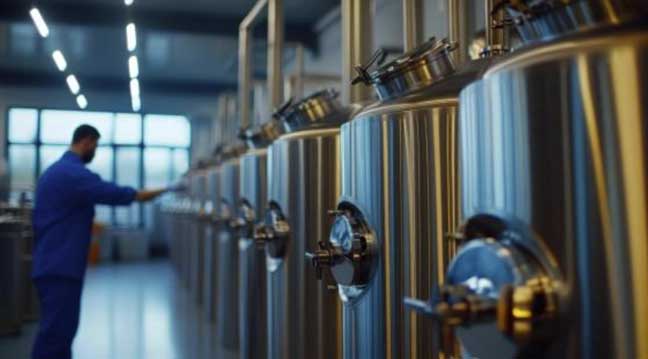
The physical distillery setup involves a series of interconnected decisions that need to be made in the right sequence and with a full understanding of how they interact. Still selection is the most visible and often the most emotionally significant decision, but it needs to be driven by the products you intend to make, not by aesthetics alone.
A traditional copper pot still produces a flavour-forward, characterful spirit well suited to gin, single malt, or brandy. A column still is designed for high-proof, neutral spirit. A hybrid still with both pot and column sections gives flexibility across product lines but comes with a higher cost and greater complexity. The right choice depends entirely on your production intent.
Beyond the still, distillery setup requires fermentation vessels of an appropriate volume and material, cooling systems adequate for the scale of production, a bottling line or access to a contract bottling service, barrel storage and warehousing if you are producing aged spirits, laboratory equipment for quality testing, and all the associated plumbing, electrical, compressed air, and fire suppression infrastructure.
None of this is trivial, and each element has capital, lead time, and installation implications. Premises selection is equally consequential. Industrial zoning suitable for manufacturing activity, adequate power and water supply, appropriate drainage, ceiling height for still installation, temperature regulation for spirit storage. These are practical requirements that rule out many sites that might otherwise seem suitable. For cellar door operations, accessibility, signage rights, parking, and proximity to a consumer catchment become additional considerations.
Realistic capital requirements for a functional small-scale distillery setup in Australia start at around $300,000 and commonly exceed $1 million when site fit-out, equipment, licensing, working capital, and initial stock are all included. Founders who enter the process with a significantly lower capital base than this tend to either stall during setup or compromise on quality in ways that affect the product and the brand.
Spirit Manufacturing: In-House vs Contract
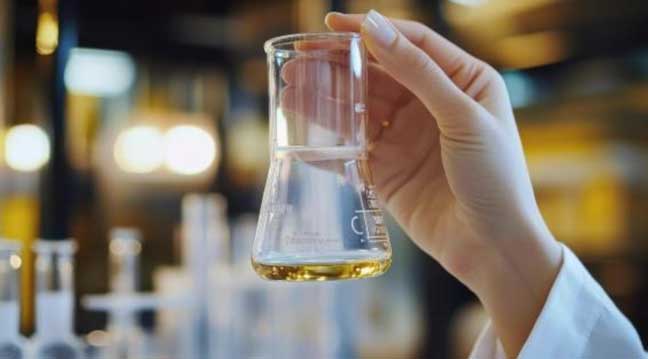
Not every spirits brand needs to own its production infrastructure and for many founders, contract spirit manufacturing is a rational and strategically sound starting point. When following a contract model, spirit manufacturing is carried out at an established, licensed distillery on your behalf, to a recipe and specification that you own and control.
The contract distillery handles the production, the excise obligations on the manufactured product, the quality testing, and the bond storage. You handle the brand, the marketing, the sales, and ultimately the distribution. This model significantly reduces the upfront capital requirement, you are not buying a still, fitting out premises, or going through the ATO licensing process.
It allows a brand to reach the market faster, with less capital at risk, and to prove the commercial case for the product before committing to infrastructure. For founders who are primarily brand-builders rather than production specialists, it can be the better long-term model, not just an interim step. It is essential to obtain the manufacturing partner agreement right to protect your IP and your margins throughout.
The trade-offs are real: you are dependent on the contract distillery’s capacity and schedule, you have less direct control over the production process, and your cost per litre is typically higher than it would be from owned production at equivalent volume. For brands with serious volume ambitions, the economics eventually tip in favour of owned production, but the threshold is higher than many people assume.
What a Feasibility Assessment Covers
Before committing capital to a distillery setup, a properly conducted feasibility assessment is the most valuable investment you can make. Not because it will necessarily change your mind about proceeding, but because it tells you what the business actually needs to look like, and whether the model you have in your head is realistic.
A thorough feasibility assessment covers:
- Projected production volumes against a realistic sales plan
- Capital requirements versus available funding and financing options
- Excise obligations modelled across different volume scenarios and product types;
- Site suitability and regulatory pathway
- Equipment specification and lead times
- Break-even analysis at both current and projected scale.
The assessment is not just a promotional suggestion, it is a stress test. Harris Bev conducts distillery feasibility assessments as a standalone engagement. Many of our distillery clients engage us at this stage, before any other commitments have been made, and the clarity it provides consistently shapes better decisions throughout everything that follows.
Getting the Right Support Around You
Starting a distillery is genuinely achievable for the right person with the right preparation. The founders who navigate the process well tend to be the ones who understood the full picture before they committed.
They are generally the ones who did the regulatory homework, modelled the excise, stress-tested the capital requirements, and thought carefully about the kind of business they were actually building before they fell in love with a particular still or a particular site.
The complexity of the regulatory and financial environment in Australian spirits means that having experienced guidance alongside you i.e. people who have been through the distillery setup process multiple times, in different states, across different product categories, makes a material difference. Not just in avoiding mistakes, but in moving faster and more confidently through a process that can otherwise feel overwhelming.
Thinking About Starting a Distillery?
Harris Bev works with founders at every stage of the distillery journey — from early feasibility assessments that test the commercial model before capital is committed, through to distillery setup, licensing and excise management, ongoing operations, and spirit manufacturing partnerships.
We bring practical experience across multiple states, product categories, and business models, and we work as part of your team rather than as external consultants kept at arm’s length.
If you are serious about building a spirits business in Australia, we would welcome an initial conversation about what your pathway could look like. Get in touch for a quick consultation to chart out your path to success.